
Germany is often seen as the heart of Europe due to its deep history. It’s well known for its beer, but the country is so much more than that. Berlin has Museum Island, Bavaria has a series of castles, and you can ski in the Alps during the winter months.
Plus it’s one of the safest countries in Europe and a large part of the population speaks English, making your travels easy and stress-free ! Whether you’re looking to eat and drink your way around the country or you want to immerse yourself amongst castles, churches or museums, Germany has something for every traveler out there.
How to Travel Germany on a Budget
Europe is well-known as a budget travel region for its ease of transportation and countless destinations that won’t break the bank.
Although the Euro has weakened against other currencies recently,traveling in Germany can still be fairly expensive when compared to other European destinations. If you are cautious in your spending and make the best of your options in terms of getting value for your money, it is still very possible to travel Germany on a budget and enjoy the experience !
Naturally, there will be some compromises on dining options and sightseeing to get the most out of your trip, but you don’t have to lessen the experience to make it affordable.
Budget Transportation in Germany
The off-season in Germany runs from November – March, so flying into Germany will be cheaper during these months.
Although Germany has an excellent high-speed rail network, the tickets aren’t always the most affordable, so if you do want to take the quickest way to your destination, make sure you book your ticket a few weeks in advance.
Helpful Tip : In cities like Munich, you can purchase daily or weekly city cards for public transportation which end up to be cheaper than paying for a bunch of individual bus and metro fares.
Budget Accommodation in Germany
If you are really looking to travel on a small budget in Germany, then your best bet is to find cheap accommodations on your route. Hostel dorm rooms are available for 10-20 EUR per night and if you want a private room, you can spend up to 60 EUR per night at either a hostel or budget hotel.
In bigger cities in Germany or during peak season,please be aware that dorm beds can cost up to 30 EUR per night. As a budget alternative, you can find typically find cheaper accommodation farther from city center and travel in daily by bus or metro.
Eating and Drinking
Berlin is by far one of the cheapest destinations for food and drink in Germany. For those who are trying to save as much money as possible, meals from the street vendors can offer the best budget meal for under 5 EUR.
The traditional German specialties like Bratwurst, Kartoffelsalat or Currywurst, a hot pork sausage cut into slices and seasoned with curry sauce, are delicious ways to experience local culture and only cost around 3-5 EUR.
Another meal option you might not expect is the wide range of ethnic food that Germany has to offer. It actually tends to be cheaper than traditional German food, so treat yourself to falafel, kebabs or a Lahmacun.
Beer is obviously very popular in Germany, but it will typically be more expensive if you are drinking in a bar or beer cellar. Grab some bottles to store at your hostel or find smaller local brewers to save a few euros.
Helpful Tip : If you are going to be drinking beer, look for the local beer varieties that are cheaper than the national beer brands.
Budget Activities in Germany
Activities and attractions are usually the biggest spending category for travelers outside of accommodation. In Germany, guided tours or riverboat cruises will set you back around 25 EUR or more, so balance your expenses with some of these budget activities:
Walking tours are a great way to get your bearings when you arrive in a new city, and give you an idea of the main sights you want to go back to. Most hostels in big cities offer walking tours daily that are usually free with a recommended tip for your guide at the end.
Check out which museums in a city interest you, and check to see if they have a certain day of the week or time period where they offer free admission.
Renting a bike can typically cost around 15 EUR a day but allows you to see more of the city or outdoors area than you could walking !
Best Time To Visit
The best time to visit Germany is the spring or fall, specifically May or October. Although this does depend on if you’re looking to attend one of Germany’s famous festivals. The spring is often met with frequent rain showers so you will want to bring an umbrella, but the temps have heated up from the winter months.
Summer is peak season and locals rejoice as the weather finally warms up, and the sunshine arrives. Pack light clothing and expect large crowds if you visit during the summer months.
As for festivals, Oktoberfest takes place from late September to early October, and the famous Christmas markets begin at the end of November.
What To Expect
Language : The official language of Germany is German, though over 50% of Germans speak English as well.
Currency : The official currency of Germany is the Euro (EUR), and the exchange rate is currently 1 GBP to 1.12 EUR.
Plugs : In Germany, the power plugs are type F, the standard voltage is 230 V, and the standard frequency is 50 Hz. I recommend buying a universal adapter.
Safety : Germany is one of the safest countries to visit in Europe. The crime rates are low, and the laws are strictly enforced and respected.
1. Munich
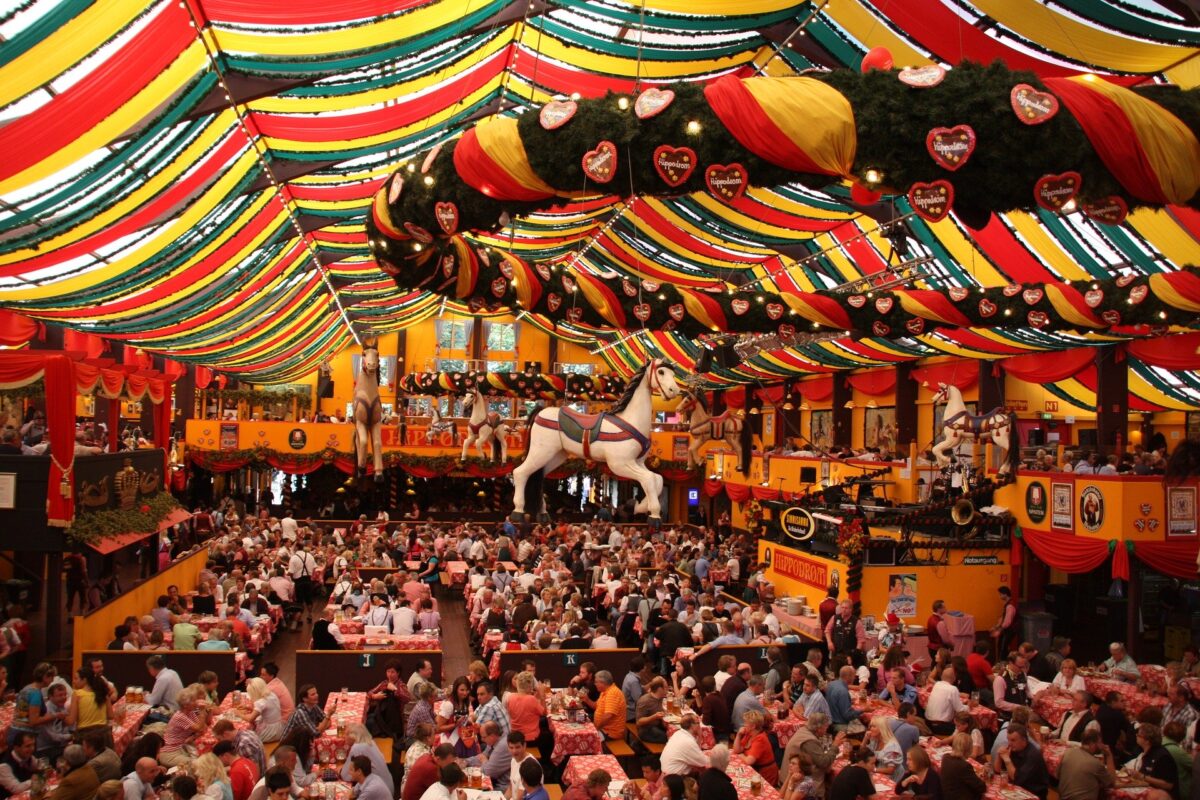
Oktoberfest is a huge festival in Munich, Germany that happens annually from mid-September to the beginning of October. The festival takes place over three consecutive weekends during which more than seven million people from around the world attend.
There are a few ways to go about finding accommodations for Oktoberfest, but the number one thing I would advise is to BOOK EARLY. A typical rule of thumb for any big festival is that the closer it gets to the event, the more expensive things are going to be.
Here are some of my top Oktoberfest recommendations :
Jaeger’s Hostel Munich : This is an excellent hostel option. It is close to the festival and has clean rooms with private bathrooms and everything else you need for an easy stay.
Wombat’s City Hostel : This hostel is a short walk to the festival, and it has everything you need for a comfortable stay. Remember to book as far in advance as you can because accommodations this close (and at this price) will go fast !
Book an Airbnb : Airbnb is a great option if you’re looking for a more personal space to come home to at night, and there are tons of Airbnb’s near the festival. A lot of them can get you even closer than any hotel can.
Camping : If you are looking for a little more adventure, a few campsites rent out tents specifically for Oktoberfest. These tend to be a bit farther away (think twenty to thirty minutes by public transport, seven to ten minutes by taxi or Uber), but they can make for a fun weekend.
You can also try the official Oktoberfest Campsite in Munich for something a little closer. These campsites offer a range of options from two-person tents with air mattresses to glamping teepees with more luxe options. Be aware that September in Germany can get very cold especially at night; pack accordingly if you are going to be sleeping outside.
Getting Around Munich :
Munich has an efficient metro system that’s pretty easy to understand. Depending on where you choose to stay, you might have to take a bus, to a train, and then walk a little to get to your final destination.
Uber is currently operating in Munich, so there is always that option. Once you get close to the festival, arrows painted on the sidewalks will point you in the right direction.
What to Expect at Oktoberfest in Munich :
The festival opens early, but tents start serving beers at around 10 a.m. and stop serving at 10:30 p.m. If you don’t have a reservation and want to get a table, prepare to arrive between 6 and 7 a.m.
You don’t need to buy tickets to get into the festival, but there is a lot to buy once you get there.
The Oktoberfest grounds are enormous, and you can choose from tons of tents and activities. Start by taking a walk through the main street to get your bearings.
What to Drink at Oktoberfest :
The main drink of Oktoberfest is of course beer.
To get a stein of beer in a tent, you must be sitting or standing at a table. Sometimes this can be tough as the tables are all very crowded. If you’re traveling solo or with a small group, people will usually let you stand near their table so that you can order. One stein of beer typically costs 10 to 12 euros, and it is easier for everyone if you have exact change ready.
There are also a couple of booths on the outside labeled “café” that sell coffee, sodas, wine, and various hard liquors.
What to Eat at Oktoberfest :
A ton of food stands line the main street, but most of them are repeats, so if you see something that catches your eye, grab it when you see it !
Some things you’ll find are bratwurst, pretzels, french fries, candy-coated assorted nuts, chocolate-covered fruit, gingerbread cookies and fish.
If you do get lucky enough to sit at a table inside a tent, order some food! All the tents serve traditional steaming-hot German meals that smell, look, and taste delicious. Most of it is some variation of pork and potatoes.
If you’re not at a table and you’re feeling a little peckish, there are always people walking around selling giant pretzels.
What to Wear to Oktoberfest :
A majority of the people at Oktoberfest wear the traditional clothing, which is a dirndl for women and lederhosen for men. It is totally fine not to wear these, but you will stand out. You can order dirndls and lederhosen on Amazon before you arrive in Germany.
The best option is to buy your garb at a store in town. Dirndls and lederhosen are available all over near the festival, so they won’t be difficult to find. Dirndls range from seventy to 150 euros while lederhosen range from 90 to 200 euros.
Lastly, if you can help it, don’t bring a purse. There are way too many stories of people who have things stolen during the festival. The best thing to do is to take only what you need and stuff it somewhere on you !
2. Berlin
Brandenburg Gate
Visit the Berlin Wall
3. Cologne
Cologne Cathedral
4. Bavaria
Go To Neuschwanstein Castle
5. Regensburg
Admired for its stunning medieval city center, the small city of Regensburg is one of Bavaria’s must-visit destinations. Located in southeastern Germany on the Danube River, it’s home to one of the greatest Christmas markets in Europe.
Regensburg is located about 80 miles from Munich (two hours by bus) and 140 miles from Salzburg (three hours by train).
A town of about 140,000 people, the closest airports are in Munich and Nuremberg, which is just about an hour away by train. It’s a bit off-the-beaten-path for most tourists but well worth a visit.
What to See and Do in Regensburg
Old Town: Of course, your first stop in Regensburg must be Old Town. As Germany’s best-preserved medieval town, strolling through the heart of the village is like stepping back in time.
Old Town boasts Roman remnants and a vast array of buildings from the 11th to the 15th centuries.
I highly recommend wandering around without a plan. Just be sure to bring your camera and wear a good pair of walking shoes ! Then see where the city takes you as you explore the winding alleyways and discover countless quaint nooks.
Danube Valley Boat Trips : Explore Germany on a Danube Christmas Market River Cruise with Crystal Cruises.
Even if you don’t do a full cruise, I’d definitely recommend a boat trip through the Danube Valley. You’ll have an idyllic view of the city, and they range from one-day trips to ten-day journeys.
Christmas Markets in Regensburg
Regensburger Christkindlmarkt : Popular since back in the 18th century, this place is still a local favorite. In fact, Germany voted this iconic market their country’s top Christmas market.
As soon as you walk in, you float through the incredible aroma of roasted chestnuts, gingerbread and mulled wine. Centered around the famous church, Neupfarrkirche, this world-famous Christmas market runs from the end of November until Christmas Eve.
Romantic Christmas Market : The picture-perfect courtyard outside of Thurn und Taxis Castle hosts a magical market. Situated right on the doorsteps of the royals, the courtyard is lit with lanterns and candles.
The Romantic Christmas Market in Regensburg has different evening themes, and they vary from year to year, so check out the calendar when you’re there. And, if you’re up late, stop in after 9 p.m.
 Pellegrini Travel