Are you struggling to work from home and be as productive as you were at the office ?

But no matter how many work from home tips your boss gives you, your day always seems to take a weird turn around lunchtime.

This can be especially true if you’re working from home with a significant other, not to mention kids.

But just like any professional skill, being productive while working from home can easily be learned. So, I’m going to teach you 8 work from home tips for success that will keep you focused, productive, and excited about your work.

So get out of bed, read the rest of this article, and get ready to master the art of working from home.

1 : Make a Morning Routine :

First and foremost, you need to create a morning routine that works well for you. This will obviously change depending on your roommate situation.

If you live alone, congrats ! You can wake up at your own leisure, take a shower, make some coffee, and do whatever you need to get started for the day.

If your partner is now working from home, you’ve got a new coworker to take into account. And if you need tips for working from home with a toddler, then a calming morning routine is especially important.

So regardless of your situation, you need to find a way to create a morning routine that puts in you a good workspace. If you’re working from home with a family, that may involve getting up extra early to get some much needed quiet time.

It’s not uncommon for people to wake up as early as 5:00 AM to get a headstart on the day. Mark Wahlberg famously woke up at 2:30 AM so he could pray, workout, eat breakfast, and shower before his family even got up…And no…I don’t recommend you go that deep. But you should still make an effort to start the day in a way that is calm, relaxing, and allows you to focus.

2 : Get Dressed :

Yes, working from home also implies you can work from your pajamas.

You may not need to get your dry cleaning done before a busy week, but even throwing a nice pair of jeans and a clean t-shirt can put you in a totally different frame of mind.

One good compromise is to treat every day like it’s “Casual Friday” at the office. That means you can relax a bit, but still hold yourself to a certain standard of dress that puts you in a productive mindset.

And as a bonus, you can treat yourself to “Super Casual Fridays” where pajamas are totally acceptable.

The point is to get up, get dressed, and get to work at least most days of the week.

3 : Create a Workspace :

Whether you have a private corner office or share a table at a coworking space, one thing is probably true:

When you go into work, you likely have a little spot you call your own.

Working from home, however, can feel a bit different. When your “home office” is a combination of your bed, your couch, and your dinner table, it can be hard for others to know when you’re on or off the clock.

In fact, sometimes it can be hard to tell for yourself.

Try to find a small space that you can carve out as your own workstation. If you have the luxury of a spare room, convert it to an office. If you don’t, no worries.

You can still set up a nice space at the kitchen table.

Simply bring a few essentials with you in the morning such as a pen, a notebook, and even a framed picture if you have one on hand.

By recreating what your desk looks like at work, you can remind yourself that working from home = vacation.

4 : Reward Yourself With Breaks :

No matter what we’d like to believe, it’s simply impossible to be productive 100% of the time, 24/7. And yes, that is even true for working hours.

People need breaks throughout the day to stay productive. And this is equally important while you’re at home.

However, it’s how you spend those breaks that really matter.

For remote workers, it can be easy to take 5–10 minutes at the end of the hour to do a few basic chores to try and keep up with housework. Running a “quick” load of laundry, picking up the living room, or even organizing that messy closet can be tempting.

After all, the more you get done today means less to do tomorrow, right? Sadly, it’s not that easy.

That’s because when it comes to your house, there’s always a project to be found. This means the time you should be taking a break to re-energize yourself is getting spent on a different type of work.

And that will simply exhaust you.

Instead, create a system in which you can take actual breaks like you would at the office. Go for a short walk around your block or read a few pages of the book you’re working on.

By taking 5–10 minutes at the end of each hour to recharge, you’ll be doing yourself and your productivity, a favor. That’s right…this is one of my tips for successfully working that actually encourages you to stop working for a bit.

Spending a few minutes with pets at the end of the hour is a great way to recharge and stave off loneliness.

5 : Stay Connected With Your Colleagues :

Research shows that people who are more social at work tend to be happier and more fulfilled. So does that mean you need to sacrifice those good things because you’re now working from home?

Absolutely not !!

And this is one of the most important tips on how to make the transition from work to home :

Just because you’re working from home doesn’t mean you need to shun your former relationships.

With all the cool telecommuting software now available, it is easier than ever to stay connected. Shoot your colleagues a quick “hello” on your company’s messaging platform or start a chat with Skype or Zoom.

6 : Eat Healthy and Exercise :

Eating healthy and exercising may not be one of your professional duties, but you’ll do yourself a huge favor by incorporating both habits into your daily work from home routine.

When 10:00 AM rolls around, it can be so easy to hit the cupboard and look for a quick snack. And since no one’s looking, you may be tempted to reach for a bag of Doritos instead of your typical carrots and humus at the office.

And hey, no judgment here. We’ve all done it.

But just like not wearing pajamas every day, you should be really disciplined with what kinds of foods you’re eating throughout the workday. Pre-preparing healthy snacks and stocking your fridge with veggies is a great way of making sure you’re fueling yourself for working productively.

Same goes for exercise.

Try taking small breaks throughout the day or schedule an online exercise class during your lunch hour. For couples alternating shifts with the kids, you can turn workouts into a family activity.

The point is that both eating right and exercise have loads of benefits on your concentration, focus, and energy. Plus, they have literally zero downsides.

So if you want to be as productive as possible while working from home, save the junk food for the weekends.

7 : Make Your Schedule Clear to Colleagues & Customers :

Along with making your schedule clear to your significant other, you should also make it clear to colleagues and customers.

But you’ll likely need to approach this type of communication differently than you did with your significant other.

Depending on how new your company is set up to encourage employees working from home, staying on the same page as your colleagues could be a challenge.

You may find people wanting to set up meetings with you throughout the entire day. Or, worse, you may find that people have a difficult time rescheduling meetings to accommodate your role as a remote worker.

Again, open communication is key here !!

Let people know your availability and share your calendar with your team. Be open about your situation and, most of the time, you’ll find that colleagues and supervisors are totally understanding given the circumstances.

8 : Block Online Distractions :

This is probably the hardest of our work from home tips: time management. But it’s also the most important to master.

The average person spends nearly 2.5 hours per day on social media. Plus, the amount of time they watch TV is roughly 4 hours.

Now imagine if all of those average people worked from home. It wouldn’t be hard to see those numbers skyrocketing.

But the fact is, the same amount of work needs to get done whether you’re at the office or in your home. So how do you keep from getting distracted ? It’s like they say, you need to fight fire with fire !

Or, in this case, fight tech with tech !!

Using some cool productivity software can help you stay on task. Here are 2 tools you can start using right now :

Stay Focused

Limit

These tools can definitely help you stay accountable while you’re working from home. And the best part ? They are totally free !

And there you have it ! My 8 tips to work from home that will help you stay as productive as possible !


How to Be an Expert In Your Blog Niche (When You Know Nothing About Your Niche)

I know this kind of comes off as a weird question. I mean, why would you blog about something you know nothing about?

Isn’t the purpose of a blog to share your expertise and knowledge ?

While that is one of many reasons to start a blog, it is certainly not a hard and fast rule when it comes to choosing your niche.

Choosing your niche is all about following your passion- and you may not be an expert when it comes to what you’re passionate about, right ?

Just because you’re educated, knowledgeable and experience in a certain field or topic doesn’t mean you want to spend all of your time writing about it.

It can be discouraging to not have the drive to write about your area of expertise and you may be tempted to throw the entire notion of niches out the window.

Before you do, I want to explain to you why niches are crucial to the success of your blog.

And then I want to tell you exactly how you can be an expert in your niche when you know nothing about your niche.

Because it’s perfectly fine to pick a lifestyle niche or a creative niche or a fun blog niche !

The Reason You Need a Blog Niche

It’s no secret that the best blogs on the web focus their content on one central theme, one topic or one niche.

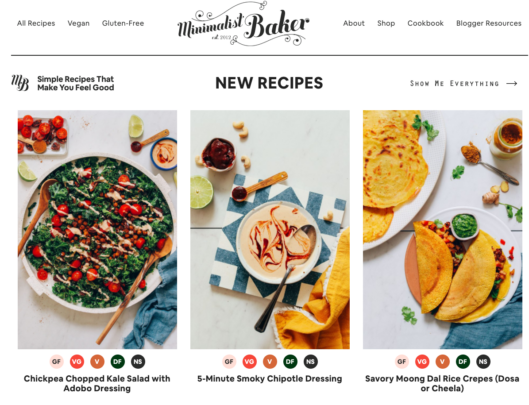
Just look at Minimalist Baker.

They are primarily a vegan-based food blog that only uses five ingredients or less for each meal.

And they have millions of visitors come to their blog for that exact type of content.

You may think that catering your blog to as many people as possible is the best way to gain traffic.

I mean, the more people you appeal to, the more people will visit – right ?

Not really. At least not the right kind of traffic.

For example, you may have an article about easy preschool crafts for children among a variety of post topics that include advancing in your career, top travel destinations and a recipe for celery soup (this is about as random as I could get).

The mom that visits for the craft ideas is going to take the information she needs and head on out.

She’s looking for toddler-related ideas and has no reason to explore the rest of your blog or even return for new posts.

Yes, that’s one visit. And you may get more visits from moms looking for craft ideas, or women looking for career advancement ideas or grannies looking for a recipe for celery soup.

Then that’s it. They come, they see, they leave and they don’t come back.

Having a blog niche is important in building a following – loyal readers who will keep coming back and share your content with others. This is the kind of traffic you want.

But we’re not here to talk about traffic. We’re here to talk about being an expert in your blog niche when you don’t know anything about your niche.

Because this is another thing a blog niche does for you: it shows your credibility and gains the trust of your readers.

And trust is a HUGE factor in making money !

So if you’re going to focus your blog on a particular niche, shouldn’t you already be an “expert” in that niche ?

Not necessarily.

Do I Have To Be an Expert in My Blog Niche?

The first thing you need to do is understand that there is a difference between being an “expert” and being knowledgeable and passionate.

More than your ability to explain things to other people, your audience is going to pick up on your passion for the topic and your want of helping others.

While it’s important to provide accurate information, readers will appreciate your experience just as much (if not more) than they appreciate expertise.

You do not have to be a world-leading expert on a subject in order to give advice. You just have to be more knowledgeable about the topic than the readers you are writing for.

I always say to be a few steps ahead of your blog audience. This is how I started Pellegrini Travel.

I naturally started having Travel bloggers come to my blog to learn the next steps to growing their blog.

And even then, there are ways to display expertise in a niche without having knowledge in a niche.

Confusing? Don’t worry. I’m going to explain that really soon.

Let your passion guide you to your blog niche. Like they said in “Field of Dreams:” “If you build it, they will come.”

5 Ways To Become an Expert In Your Blog Niche

If you find yourself passionately drawn to a topic you know nothing about gardening, social media marketing –  here are some ways you can become an expert in your niche :

1. Don’t Focus on Being the “Best”

The more pressure you put on yourself to be the “best” in your blog niche, the less confidence you will have in sharing your knowledge and experience.

To be honest, there will always be people who are smarter, more skilled and more knowledgeable than you are.

Think about this way: You are (obviously) a writer. You have a blog, right? You write posts for it, right?

Who says you can’t teach other people to write good content on writing a blog as well ? You’re not J.K. Rowling but your writing experience and knowledge is valuable to other people.

Here’s another example : You are a father and have potty trained your children. You don’t have to be a leading pediatrician to help other fathers through their potty training struggles.

You don’t have to be the best in the world. You only need to be the best to your readers, who are looking to you because they lack the knowledge and experience you have.

And those people who are “better” than you in your niche ? They are your teachers – someone to look up to and learn from.

So when you’re diving into a blog niche you are not an expert in, you can still provide value and support to those who need it.

2. Do a Case Study

Case studies are helpful when you want to blog about a topic you don’t have a lot of knowledge in. They allow you an opportunity to share with your readers your journey in learning about a particular topic

For example, you may not know anything about the Keto diet but want to incorporate this way of eating into your life. You could focus your content on your journey, your struggles and your wins.

Case studies are a great way to share your process with your readers and I’ve personally used them to chronicle my learning experiences.

For instance, I did one for this site on growing a blog. I had never grown a blog before, so I chronicled my journey and detailed what I learned along the way.

I wasn’t an expert in blog growth, but framing the information I wanted to share with my learning experience gave my readers not only insight into what I learned but also a detailed guide on how to do the same – successes and failures too.

Again, it’s not about being the Lead So-and-So of your blog niche – it’s all about giving your audience valuable content that solves their problem.

3. Educate Yourself and Do Your Research

When you’re writing in a blog niche that you are not an expert in, you want to make sure you are providing true and accurate information.

An important factor in building an audience is building trust. Readers are going to better appreciate you being honest about not being an expert than trying to pull the wool over their eyes.

This advice actually bodes true for anything you write, whether you are a pro or not. No matter what message you want to share with your audience, you should always back it up by citing references.

Doing so will lend further credibility to your information.

Here are two examples:

  1. You want to start a blog about breastfeeding having breastfed your children. You plan to draw upon your experience because you are not a lactation expert. Even though you’ve gone through it, you still want to provide your readers with access to studies to back up your information.
  2. You are starting a blog about following the Keto diet having never done it before. You want to focus on an audience who have never tried it either by bringing them with you on your journey. Here it’s important to cite solid information so that your readers trust you are leading them down the right path.

You’re not trying to “prove” yourself – your content is not an argument against those who are skeptical of your “expertise.” You are simply being honest with your audience and admitting that you don’t have ALL the knowledge or answers.

Readers appreciate that kind of transparency.

4. Turn to the Experts

While you don’t have to be an expert to offer valuable information in your niche, you can always turn to the experts to gather more information.

And I don’t mean simply citing the work of others. Get in touch with experts, influencers, other bloggers or even friends and acquaintances that may have more knowledge and experience than you.

You can set up an interview, ask for a quote or simply pick their brains to gain information about your niche.

If you find a blog that does a good job covering topics in your niche, sign up for their newsletter. This will help you gain some “behind-the-scenes” insight into their niche and process.

Added bonus: Networking like this is not only great for increasing your knowledge about your niche but it also helps gain quality traffic to your site.

Don’t be afraid to lean on the knowledge of others to help build your level of expertise in your niche.

5. Practice Makes Perfect

Okay, so I don’t want you to get caught up in being “perfect” – there’s no such thing, even for the most successful bloggers out there.

What I’m saying is that the more you blog about your niche, the more you will gain valuable knowledge and the closer you will become to being an expert.

So, the more you write, the more content you publish and the more interactions you have online, the better you will become.

That being said, keep in mind that quality is still better than quantity. Don’t focus on pumping out a lot of content just to prove you know what you are talking about.

Instead, focus on creating well-written and thought-out pieces in a regular basis.

Use online resources, expert advise and, of course, your own experience to create valuable content readers will gravitate toward in order to gain information or solve a problem.

How Much Do You Know About Your Niche?

It may seem silly to blog about something you don’t know anything about, but being a successful blogger is a marathon, not a race.

If you’re going to dedicate yourself to growing your blog, you need to focus on something that you’re passionate about – something you find joy in writing about.

Now I want to hear from you ! How much do you really know about your niche ?

Why are you attracted to that topic ?

Blog at WordPress.com.

Up ↑

Design a site like this with WordPress.com
Get started